This article describes the content of the v6.2.1 release of the Yocto-based OpenSTLinux ecosystem, the flagship of the STM32 MPU Linux®-based ecosystems
1. Ecosystem content[edit | edit source]
The Yocto-based OpenSTLinux-ecosystem releases aim at:
- providing a full ecosystem for the STM32 Arm® Cortex® MPUs

- working efficiently with STM32 MPU boards, using one of the packages (Starter Package, Developer Package or Distribution Package) provided by STMicroelectronics. Refer to Which Package better suits your needs for more information related to those packages.
The ecosystem releases consist of:
- Supported development boards
- Yocto-based OpenSTLinux Embedded Software
- OpenSTLinux for all MPUs,
- OP-TEE
- TF-A
- U-Boot
- Linux kernel
- FwST-M
- STM32CubeMP1 (Arm® Cortex®-M4) for STM32MP15x lines ,
- STM32CubeMP2 (Arm® Cortex®-M33 and Arm® Cortex®-M0+) for STM32MP2 series,
- TF-M (Arm® Cortex®-M33) for STM32MP2 series
- STM32CubeMP1 (Arm® Cortex®-M4) for STM32MP15x lines
- OpenSTLinux for all MPUs,
- Embedded software utilities, for all MPUs:
- STM32DDRFW-UTIL,
- STM32PRGFW-UTIL,
- STM32MPUSSP-UTIL
- Development tools, for all MPUs:
- STM32CubeIDE,
- STM32CubeMX,
- Programming tools
- STM32CubeProgrammer,
- Keygen tool,
- Signing tool,
- Trusted package creator tool,
- STM32PRG-TOOLBOX
- STM32PRG-TOOLBOX-DFU,
- STM32PRG-TOOLBOX-FB
- STM32CubeProgrammer,
2. v6.2.1 scope[edit | edit source]
The Yocto-based OpenSTLinux-ecosystem-v6.2.1 release is dedicated to the STM32MP1 series and STM32MP2 series.
2.1. Main changes[edit | edit source]
It is a major release, based on new Linux community components version, listed in the STM32 MPU OpenSTLinux release note - v6.2.1.
This release brings mainly fixes and improvements for M33-TD flavor  for STM32MP2 series.
You can learn more on the 2 possible boot flavors, for STM32MP2 series, by reading the article How to choose the STM32MP2 boot flavor.
The main changes provided by the release are:
- STM32MP2 series M33-TD flavor features in FwST-M BSP
- New low power modes support (standby2, LPLV stop2)
- Platform shutdown
- A35 independent reboot (in case of crash)
- Single boot device firmware update
- Dual boot device firmware update
- CES / EWC demonstrations
- SBOM in cycloneDX format, available at Starter package root and also under github (https://github.com/STMicroelectronics/oe-manifest.git)
- Various fixes
- OpenSTLinux BSP components updates
- Linux kernel v6.6-stm32mp-r3.1 (LTS v6.6.129)
- TF-A v2.10-stm32mp-r3.1 (LTS v2.10.24)
- U-Boot v2023.10-stm32mp-r3.1
- OP-TEE 4.0.0-stm32mp-r3.1
- External DT v6-stm32mp-r3.1
- STM32CubeMP2 Package v1.3.1
- TF-M v2.1.4-stm32mp-r2.1 (LTS v2.1.4)
- OpenSTLinux build process components updates
- OpenEmbedded v5.0.17 (Scarthgap)
- GCC version v13.4.0
- OpenSTLinux firmware utilities update
- STM32DDRFW-UTIL V1.6.0
- Add DMA stress tests
- Add VREF print command
- Various fixes
- STM32DDRFW-UTIL V1.6.0
- Development tools updates
- STM32CubeIDE 2.2.0 (alignment with OpenSTLinux v6.2.1)
- STM32CubeMX 6.18 (alignment with OpenSTlinux v6.2.1)
- STM32CubeProgrammer v2.23 (alignment with OpenSTlinux v6.2.1)
- STM32PRG-TOOLBOX-DFU 2.2.0 (fixes and feature enhancements)
- STM32PRG-TOOLBOX-FB 2.2.0 (fixes and feature enhancements)
More information is available in detailed release notes referenced in chapters below.
2.2. Main restrictions[edit | edit source]
No major restriction. More information is available in detailed release notes referenced in chapters below.
3. Intended audience[edit | edit source]
The targeted audience is STM32MPU customers and partners.
4. Licensing[edit | edit source]
This software package is licensed under a SOFTWARE LICENSE AGREEMENT FOR ST MATERIALS (SLA). Customers should only use this package in compliance with the software license agreement (SLA), STM32CubeMP15 licenses, and STM32CubeMP2 licenses.
5. Supported development boards[edit | edit source]
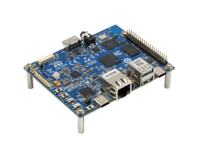
This Ecosystem delivery is compatible with the following boards:
| STM32MP13 boards | |||
|---|---|---|---|
| Boards | PCBs list | Main features | Ordering |
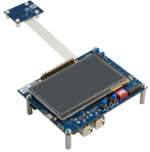 STM32MP135F-DK Discovery kit |
|
|
|
| STM32MP15 boards | |||
|---|---|---|---|
| Boards | PCBs list | Main features | Ordering |
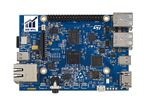 STM32MP157D-DK1 Discovery kit |
|
|
|
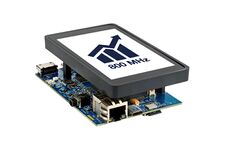 STM32MP157F-DK2 Discovery kit |
|
|
|
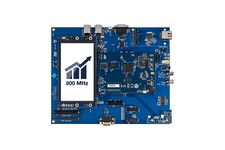 STM32MP157D-EV1 Evaluation board |
|
|
|
STM32MP157F-EV1 Evaluation board |
|
|
|
| STM32MP21 boards | |||
|---|---|---|---|
| Boards | PCBs list | Main features | Ordering |
 STM32MP215F-DK Discovery kit |
|
|
|
| STM32MP23 boards |
|---|

| STM32MP25 boards | |||
|---|---|---|---|
| Boards | PCBs list | Main features | Ordering |
 STM32MP257F-EV1 Evaluation board |
|
|
|
 STM32MP257F-DK Discovery kit |
|
|
|
 Information Information
|
| The STLINK, embedded on the boards, requires upgraded USB PC drivers: see ST-LINK article |
6. Embedded software[edit | edit source]
In the table below, for each STM32 MPU device, you can find on which Cortex® the embedded software are running.
| Embedded software | STM32MP13x lines |
STM32MP15x lines |
STM32MP21x lines |
STM32MP23x lines |
STM32MP25x lines
|
|---|---|---|---|---|---|
| OpenSTLinux for Arm® Cortex®-A |  Cortex®-A7 Cortex®-A7
|
Cortex®-A7
|
Cortex®-A35
|
Cortex®-A35
|
Cortex®-A35
|
| FwST-M for Arm® Cortex®-M |  Not applicable Not applicable |
Cortex®-M4 |
Cortex®-M33 |
Cortex®-M33 |
Cortex®-M33 Cortex®-M0
|
| STM32DDRFW-UTIL for Arm® Cortex®-A | Cortex®-A7 |
Cortex®-A7 |
Cortex®-A35 |
Cortex®-A35 |
Cortex®-A35
|
| STM32PRGFW-UTIL for Arm® Cortex®-A | Cortex®-A7 |
Cortex®-A7 |
Cortex®-A35 |
Cortex®-A35 |
Cortex®-A35
|
| STM32MPUSSP-UTIL for Arm® Cortex®-A | Cortex®-A7 |
Cortex®-A7 |
Cortex®-A35 |
Cortex®-A35 |
Cortex®-A35
|
6.1. Yocto-based OpenSTLinux embedded software[edit | edit source]
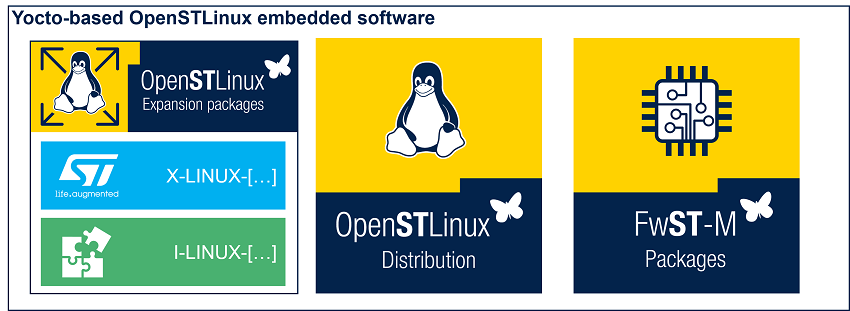
The Yocto-based OpenSTLinux embedded software is part of the STM32 MPU embedded software offer.
It is a set of software (see architecture overview), system build and development tools created to ease the development to be done on top of STM32 MPU devices.
Yocto-based OpenSTLinux embedded software includes:
- a Linux® distribution, running on the Arm® Cortex®-A processor(s): OpenSTLinux distribution
- firmwares, running on the Arm® Cortex®-M processor: FwST-M Packages (only for STM32MP15x lines and STM32MP2 series)
- and enriched OpenSTLinux expansion packages that can be applied on the top of the Yocto-based OpenSTLinux embedded software to enable the use of additional components for a specific feature (such as AI-based computer vision).
6.1.1. OpenSTLinux Distribution for Arm® Cortex®-A[edit | edit source]
Updated openstlinux-6.6-yocto-scarthgap-mpu-v26.06.10 is the version delivered with the Yocto-based OpenSTLinux-ecosystem-v6.2.1.
The release note gives information and details about the features / content / restrictions of the OpenSTLinux Distribution.
It does not explain how to download the software. For that, refer to How to download the software and start with this release chapter.
| Firmware | Release note | Version |
| OpenSTLinux Distribution | STM32 MPU OpenSTLinux release note - v6.2.1 | openstlinux-6.6-yocto-scarthgap-mpu-v26.06.10 |
6.1.2. FwST-M packages for Arm® Cortex®-M[edit | edit source]
The release notes give information and details about the features / content / restrictions of the Packages.
They do not explain how to download the software. For that, refer to How to download the software and start with this release chapter.
| Firmware | Release note | Version |
| STM32CubeMP2 Package | STM32CubeMP2 Package release note - v1.3.1 | STM32CubeMP2 Package v1.3.1 |
| STM32CubeMP15 Package | STM32CubeMP15 Package release note - v1.7.0 | STM32CubeMP1 Package v1.7.0 |
| TF-M Package | TF-M release note - v2.1.4 | TF-M v2.1.4 |
6.1.3. OpenSTLinux expansion packages[edit | edit source]
OpenSTLinux expansion packages are delivered on top of OpenSTLinux releases. The detailed status of OpenSTLinux expansion packages is described in OpenSTLinux expansion packages article.
6.2. Embedded software utilities[edit | edit source]
The release notes give information and details about the features / content / restrictions of the Utilities.
Each release note gives information on how to flash and to use the corresponding embedded software utility/tool.
The versions mentioned in the table below are the ones with which the full ecosystem has been tested and validated.
| Tools | Release notes | Host PC | |
| Linux® version | Windows version | ||
| STM32DDRFW-UTIL (for Arm® Cortex®-A) | STM32DDRFW-UTIL release note | 1.6.0 | 1.6.0 |
| STM32PRGFW-UTIL (for Arm® Cortex®-A) | STM32PRGFW-UTIL release note | 1.2.0 | 1.2.0 |
| STM32MPUSSP-UTIL (for Arm® Cortex®-A) | STM32MPUSSP-UTIL_release_note | 1.1.0 | 1.1.0 |
7. Development tools[edit | edit source]
The table below lists the available tools, and provides links to the corresponding release notes.
Each release note gives information about features / content / restrictions and on how to install and use the corresponding tool.
The versions mentioned in the table below are the ones with which the full ecosystem has been tested and validated. It is highly recommended to stay on those versions even if more recent versions are available.
The set of tools that can be downloaded depends on the package that is used (double check Which Package better suits your needs article for more information on each package).
| Tools | Release notes | Host PC | Which Package may need the tool ? | |||
| Linux® version | Windows version | Starter Package | Developer Package | Distribution Package | ||
| STM32CubeIDE | STM32CubeIDE release note | v2.2.0 | v2.2.0 | ☐ | ☑ | ☐ |
| STM32CubeMX | STM32CubeMX release note | v6.18 | v6.18 | ☐ | ☑ | ☑ |
| STM32CubeProg | STM32CubeProgrammer release note | v2.23 | v2.23 | ☑ | ☐ | ☑ |
| STM32PRG-TOOLBOX-DFU | STM32PRG-TOOLBOX-DFU release note | v2.2.0 | v2.2.0 | ☑ | ☑ | ☑ |
| STM32PRG-TOOLBOX-FB | STM32PRG-TOOLBOX-FB release note | v2.2.0 | v2.2.0 | ☑ | ☑ | ☑ |
8. Documentation[edit | edit source]
- The present user guide in Wiki format provides many articles related to software,
- The Category:STM32 MPU technical literature references all technical document provided by ST and mainly used in this wiki.
9. How to download the software and start with this release[edit | edit source]
Refer to Yocto-based OpenSTLinux embedded software article.
10. Package repository service[edit | edit source]
The package repository for the OpenSTLinux distribution contains standard Linux APT packages compatible with the OSTL distribution. This service makes it easy to enrich or update the starter packages uploaded to ST boards using standard APT commands from the board console.
- The Package Repository Service
- hosted at the nonbrowsable URL http://packages.openstlinux.st.com,
- enabled by default in the Starter Package,
- providing regularly updated or additional packages.
11. Minor release updates[edit | edit source]
STMicroelectronics regularly delivers corrections through github® components which are U-Boot, OP-TEE, TF-A , Linux kernel .
The corrections can be incorporated into the STM32MPU Developer Package or Distribution Package (see below).
Two possibilities exist to update a Distribution Package:
- Update your existing Distribution Package:
- Switch your Distribution Package to # github® mode .
- Use the devtool modify <recipe name> command to set up an environment. It fetches and unpacks the source code.
- In the extracted source code, use a git command such as git checkout -b WORK <github® TAG> to point to a new revision of the component.
- More rarely, STMicroelectronics also delivers fixes on layers through github®. These changes can be integrated (via git commands: git checkout -b WORK <github® commit SHA1>) into the local STM32MPU Distribution Package environment. See below the github® links of the quoted layers :
- Get a new Distribution Package:
- Refer to Installing_the_OpenSTLinux_distribution page for installing instructions, and use the repo command given for the minor version below, if it exists.
12. References[edit | edit source]
13. Archives  [edit | edit source]
| Yocto-based OpenSTLinux ecosystem release | Ecosystem release note |
|---|---|
| Yocto-based OpenSTLinux ecosystem-v6.2.0 | Yocto-based OpenSTLinux ecosystem release note - v6.2.0 |
| Yocto-based OpenSTLinux ecosystem-v6.1.0 | STM32 MPU ecosystem release note - v6.1.0 |
| Yocto-based OpenSTLinux ecosystem-v6.0.0 | STM32 MPU ecosystem release note - v6.0.0 |
| STM32MPU-ecosystem-v5.1.0 | STM32 MPU ecosystem release note - v5.1.0 page for the v5 ecosystem releases (in archived wiki) |
| STM32MP1-ecosystem-v5.0.0 | STM32 MPU ecosystem release note - v5.0.0 page for the v5 ecosystem releases (in archived wiki) |
| STM32MP1-ecosystem-v4.1.0 | STM32 MPU ecosystem release note - v4.1.0 page for the v4 ecosystem releases (in archived wiki) |
| STM32MP1-ecosystem-v4.0.0 | STM32 MPU ecosystem release note - v4.0.0 page for the v4 ecosystem releases (in archived wiki) |
Arm® is a registered trademark of Arm Limited (or its subsidiaries) in the US and/or elsewhere. 
Arm® is a registered trademark of Arm Limited (or its subsidiaries) in the US and/or elsewhere.