This article describes the content of the v7.0.0 release of the Yocto-based OpenSTLinux ecosystem, the flagship of the STM32 MPU Linux®-based ecosystems
1. Ecosystem content[edit | edit source]
The Yocto-based OpenSTLinux-ecosystem releases aim at:
- providing a full ecosystem for the STM32 Arm® Cortex® MPUs

- working efficiently with STM32 MPU boards, using one of the packages (Starter Package, Developer Package or Distribution Package) provided by STMicroelectronics. Refer to Which Package better suits your needs for more information related to those packages.
The ecosystem releases consist of:
- Supported development boards
- Yocto-based OpenSTLinux Embedded Software
- OpenSTLinux for all MPUs,
- OP-TEE
- TF-A
- U-Boot
- Linux kernel
- FwST-M
- STM32CubeMP1 (Arm® Cortex®-M4) for STM32MP15x lines ,
- STM32CubeMP2 (Arm® Cortex®-M33 and Arm® Cortex®-M0+) for STM32MP2 series,
- TF-M (Arm® Cortex®-M33) for STM32MP2 series
- STM32CubeMP1 (Arm® Cortex®-M4) for STM32MP15x lines
- OpenSTLinux for all MPUs,
- Embedded software utilities, for all MPUs:
- STM32DDRFW-UTIL,
- STM32PRGFW-UTIL,
- STM32MPUSSP-UTIL
- Development tools, for all MPUs:
- STM32CubeIDE,
- STM32CubeMX,
- Programming tools
- STM32CubeProgrammer,
- Keygen tool,
- Signing tool,
- Trusted package creator tool,
- STM32PRG-TOOLBOX
- STM32PRG-TOOLBOX-DFU,
- STM32PRG-TOOLBOX-FB
- STM32CubeProgrammer,
2. v7.0.0 scope[edit | edit source]
The Yocto-based OpenSTLinux-ecosystem-v7.0.0 release is dedicated to the STM32MP1 series and STM32MP2 series.
2.1. Main changes[edit | edit source]
It is a major release, based on new Linux community components version, listed in the STM32 MPU OpenSTLinux release note - v7.0.0.
This release brings mainly fixes and improvements for STM32MP2 series (for both M33-TD flavor  and A35-TD flavor ), and for STM32MP1 series.
You can learn more on the 2 possible boot flavors, for STM32MP2 series, by reading the article How to choose the STM32MP2 boot flavor.
The main changes provided by the release are:
- BSP components and distribution version rebase
- STM32MP2 series M33-TD flavor features in FwST-M BSP
- Small Profile introduced (improve Arm-Cortex-M33 nonsecure RealTime performance)
- STM32MP2 series A35-TD flavor features in OpenSTLinux BSP
- USB3DR Type-C speed device only (without using Arm-Cortex-M33 firmware)
- New demonstration of OpenAMP CoPro (to replace "USCI firmware as coprocessor" demonstration)
- Support A/B Firmware Update evolution (File system update support in addition of boot stages update support)
- STM32MP1 series features in OpenSTLinux BSP
- Full SCMI activated by default on STM32MP15x lines (implementation alignment with STM32MP13x lines and STM32MP2 series)
- PSCI OSI enabled by default on STM32MP15x lines and STM32MP13x lines boards
- Full SCMI activated by default on STM32MP15x lines
- OpenSTLinux BSP components updates
- Linux kernel v6.18-stm32mp-r1 (LTS v6.18.37)
- TF-A v2.14-stm32mp-r1 (LTS v2.14.8)
- U-Boot v2026.04-stm32mp-r1
- OP-TEE 4.8.0-stm32mp-r1
- External DT v7-stm32mp-r1
- STM32CubeMP2 Package v1.4.0
- OpenOCD version v0.12.0
- TF-M v2.1.5-stm32mp-r1 (LTS v2.1.5)
- OpenSTLinux build process components updates
- OpenEmbedded v6.0.4 (wrynose)
- GCC version v15.3.0
- OpenSTLinux firmware utilities update
- STM32DDRFW-UTIL V1.7.0
- Platform eye diagram generation
- STM32DDRFW-UTIL V1.7.0
- Development tools updates
- STM32CubeIDE v2.3.0 (alignment with OpenSTLinux v7.0.0)
- STM32CubeMX v6.19.0 (alignment with OpenSTlinux v7.0.0)
- STM32CubeProgrammer v2.24
More information is available in detailed release notes referenced in chapters below.
2.2. Main restrictions[edit | edit source]
- The partition layout always keeps the firmware update related partitions even if machine feature fw-update is disabled. To optimize the partition layout without firmware update feature, modifications are needed on flashlayout file generation, and also on U-Boot source code in case of MTD partitions (storage mapping is hardcoded for MTD partitions, see How_to_configure_U-Boot_for_your_board#MTD_partitions).
- STM32MP135F-DK : Restriction concerning "WoL from PHY" feature (missing "/delete-property/ power-domains;" in DT node Ethernet1). Updated procedure is described in Ethernet_device_tree_configuration#How_to_enable_and_use_WoL_from_PHY chapter.
- Bluetooth connection / pairing issue with some devices (linked to community updates in Linux Kernel version).
- Warnings:
- As STM32MP15x lines software uses now full SCMI by default with secure I2C, the USB Type-C is no more available by default on STM32MP157x-DKx board.
- Previous regulator management in Linux (allowing USB Type-C support on STM32MP157x-DKx board) is still available by selecting a dedicated device tree example delivered in dt-stm32mp component.
- Previous regulator management in Linux (allowing USB Type-C support on STM32MP157x-DKx
- As USB is now managed in Linux, the power delivery feature is no more available by default. USB power delivery feature is only available via UCPD firmware (device tree delivered as an example in dt-stm32mp component).
- Uniprocessor support removed from Linux Kernel scheduler. SMP scheduler is now used on all systems. This impacts performance on uniprocessor (roughly 5% performance regression). See An end to uniprocessor configurations.
- Some updates done by community's default configuration are impacting boot time. These configurations could be updated to improve boot time:
- Linux Kernel modules mainly move on external (not builtin)
- Usage of udev on initrd to solve issues with power domain constrains and dependencies (udev are called 2 times: one in initrd and one on userland)
- systemd in Yocto Wrynose comes with the new service "systemd-networkd-wait-online.service" which are dedicated to "wait for network to come oneline".
- By default, this service waits for all network interfaces to come online. On a board with multiple ETH ports, if all these ports are not used, the boot time will be impacted. Tips are available in OpenSTLinux release note.
- PIE (Position-Independent Executable) is enabled by default GLibC building in new Yocto Wrynose to improve security. It needs to be deactivated to debug application, and it can also impact the applications performance on 32bits architecture (STM32MP1 series). See Compiler-Options-Hardening-Guide-for-C-and-C++. (See User_space_and_applications change notifications for more information)
- As STM32MP15x lines
3. Intended audience[edit | edit source]
The targeted audience is STM32MPU customers and partners.
4. Licensing[edit | edit source]
This software package is licensed under a SOFTWARE LICENSE AGREEMENT FOR ST MATERIALS (SLA). Customers should only use this package in compliance with the software license agreement (SLA), STM32CubeMP15 licenses, and STM32CubeMP2 licenses.
5. Supported development boards[edit | edit source]
This Ecosystem delivery is compatible with the following boards:
| STM32MP13 boards | |||
|---|---|---|---|
| Boards | PCBs list | Main features | Ordering |
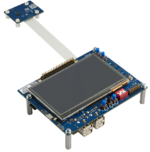 STM32MP135F-DK Discovery kit |
|
|
|
| STM32MP15 boards | |||
|---|---|---|---|
| Boards | PCBs list | Main features | Ordering |
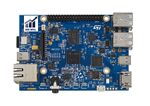 STM32MP157D-DK1 Discovery kit |
|
|
|
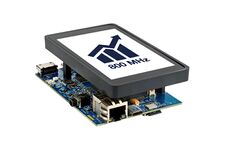 STM32MP157F-DK2 Discovery kit |
|
|
|
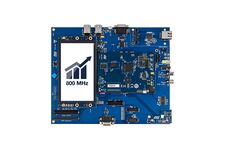 STM32MP157D-EV1 Evaluation board |
|
|
|
STM32MP157F-EV1 Evaluation board |
|
|
|
| STM32MP21 boards | |||
|---|---|---|---|
| Boards | PCBs list | Main features | Ordering |
 STM32MP215F-DK Discovery kit |
|
|
|
| STM32MP23 boards |
|---|

| STM32MP25 boards | |||
|---|---|---|---|
| Boards | PCBs list | Main features | Ordering |
 STM32MP257F-EV1 Evaluation board |
|
|
|
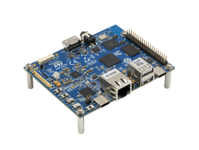 STM32MP257F-DK Discovery kit |
|
|
|
 Information |
| The STLINK, embedded on the boards, requires upgraded USB PC drivers: see ST-LINK article |
6. Embedded software[edit | edit source]
In the table below, for each STM32 MPU device, you can find on which Cortex® the embedded software are running.
| Embedded software | STM32MP13x lines |
STM32MP15x lines |
STM32MP21x lines |
STM32MP23x lines |
STM32MP25x lines
|
|---|---|---|---|---|---|
| OpenSTLinux for Arm® Cortex®-A |  Cortex®-A7 |
Cortex®-A7
|
Cortex®-A35
|
Cortex®-A35
|
Cortex®-A35
|
| FwST-M for Arm® Cortex®-M |  Not applicable |
Cortex®-M4 |
Cortex®-M33 |
Cortex®-M33 |
Cortex®-M33 Cortex®-M0
|
| STM32DDRFW-UTIL for Arm® Cortex®-A | Cortex®-A7 |
Cortex®-A7 |
Cortex®-A35 |
Cortex®-A35 |
Cortex®-A35
|
| STM32PRGFW-UTIL for Arm® Cortex®-A | Cortex®-A7 |
Cortex®-A7 |
Cortex®-A35 |
Cortex®-A35 |
Cortex®-A35
|
| STM32MPUSSP-UTIL for Arm® Cortex®-A | Cortex®-A7 |
Cortex®-A7 |
Cortex®-A35 |
Cortex®-A35 |
Cortex®-A35
|
6.1. Yocto-based OpenSTLinux embedded software[edit | edit source]
The Yocto-based OpenSTLinux embedded software is part of the STM32 MPU embedded software offer.
It is a set of software (see architecture overview), system build and development tools created to ease the development to be done on top of STM32 MPU devices.
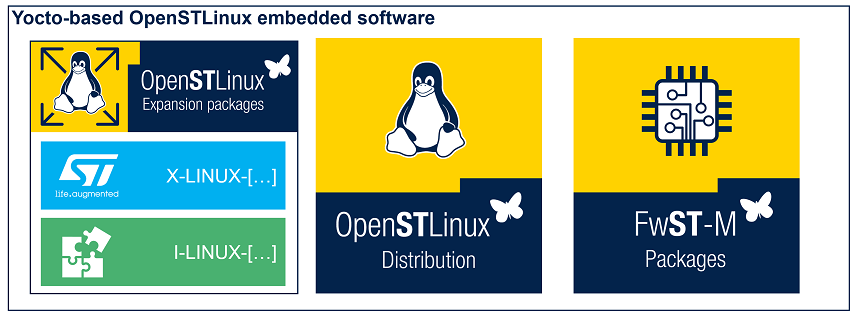
Yocto-based OpenSTLinux embedded software includes:
- a Linux® distribution, running on the Arm® Cortex®-A processor(s): OpenSTLinux distribution
- firmwares, running on the Arm® Cortex®-M processor: FwST-M Packages (only for STM32MP15x lines and STM32MP2 series)
- and enriched OpenSTLinux expansion packages that can be applied on the top of the Yocto-based OpenSTLinux embedded software to enable the use of additional components for a specific feature (such as AI-based computer vision).
6.1.1. OpenSTLinux Distribution for Arm® Cortex®-A[edit | edit source]
Updated openstlinux-6.18-yocto-wrynose-mpu-v26.11.06 is the version delivered with the Yocto-based OpenSTLinux-ecosystem-v7.0.0.
The release note gives information and details about the features / content / restrictions of the OpenSTLinux Distribution.
It does not explain how to download the software. For that, refer to How to download the software and start with this release chapter.
| Firmware | Release note | Version |
| OpenSTLinux Distribution | STM32 MPU OpenSTLinux release note - v7.0.0 | openstlinux-6.18-yocto-wrynose-mpu-v26.11.06 |
6.1.2. FwST-M packages for Arm® Cortex®-M[edit | edit source]
The release notes give information and details about the features / content / restrictions of the Packages.
They do not explain how to download the software. For that, refer to How to download the software and start with this release chapter.
| Firmware | Release note | Version |
| STM32CubeMP2 Package | STM32CubeMP2 Package release note - v1.4.0 | STM32CubeMP2 Package v1.4.0 |
| STM32CubeMP15 Package | STM32CubeMP15 Package release note - v1.7.0 | STM32CubeMP1 Package v1.7.0 |
| TF-M Package | TF-M release note - v2.1.5 | TF-M v2.1.5 |
6.1.3. OpenSTLinux expansion packages[edit | edit source]
OpenSTLinux expansion packages are delivered on top of OpenSTLinux releases. The detailed status of OpenSTLinux expansion packages is described in OpenSTLinux expansion packages article.
6.2. Embedded software utilities[edit | edit source]
The release notes give information and details about the features / content / restrictions of the Utilities.
Each release note gives information on how to flash and to use the corresponding embedded software utility/tool.
The versions mentioned in the table below are the ones with which the full ecosystem has been tested and validated.
| Tools | Release notes | Host PC | |
| Linux® version | Windows version | ||
| STM32DDRFW-UTIL (for Arm® Cortex®-A) | STM32DDRFW-UTIL release note | 1.7.0 | 1.7.0 |
| STM32PRGFW-UTIL (for Arm® Cortex®-A) | STM32PRGFW-UTIL release note | 1.2.1 | 1.2.1 |
| STM32MPUSSP-UTIL (for Arm® Cortex®-A) | STM32MPUSSP-UTIL_release_note | 1.1.0 | 1.1.0 |
7. Development tools[edit | edit source]
The table below lists the available tools, and provides links to the corresponding release notes.
Each release note gives information about features / content / restrictions and on how to install and use the corresponding tool.
The versions mentioned in the table below are the ones with which the full ecosystem has been tested and validated. It is highly recommended to stay on those versions even if more recent versions are available.
The set of tools that can be downloaded depends on the package that is used (double check Which Package better suits your needs article for more information on each package).
| Tools | Release notes | Host PC | Which Package may need the tool ? | |||
| Linux® version | Windows version | Starter Package | Developer Package | Distribution Package | ||
| STM32CubeIDE | STM32CubeIDE release note | v2.3.0 | v2.3.0 | ☐ | ☑ | ☐ |
| STM32CubeMX | STM32CubeMX release note | v6.19 | v6.19 | ☐ | ☑ | ☑ |
| STM32CubeProg | STM32CubeProgrammer release note | v2.24 | v2.24 | ☑ | ☐ | ☑ |
| STM32PRG-TOOLBOX-DFU | STM32PRG-TOOLBOX-DFU release note | v2.2.0 | v2.2.0 | ☑ | ☑ | ☑ |
| STM32PRG-TOOLBOX-FB | STM32PRG-TOOLBOX-FB release note | v2.2.0 | v2.2.0 | ☑ | ☑ | ☑ |
8. Documentation[edit | edit source]
- The present user guide in Wiki format provides many articles related to software,
- The Category:STM32 MPU technical literature references all technical document provided by ST and mainly used in this wiki.
9. How to download the software and start with this release[edit | edit source]
Refer to Yocto-based OpenSTLinux embedded software article.
10. Package repository service[edit | edit source]
The package repository for the OpenSTLinux distribution contains standard Linux APT packages compatible with the OSTL distribution. This service makes it easy to enrich or update the starter packages uploaded to ST boards using standard APT commands from the board console.
- The Package Repository Service
- hosted at the nonbrowsable URL http://packages.openstlinux.st.com,
- enabled by default in the Starter Package,
- providing regularly updated or additional packages.
11. Minor release updates[edit | edit source]
STMicroelectronics regularly delivers corrections through github® components which are U-Boot, OP-TEE, TF-A , Linux kernel .
The corrections can be incorporated into the STM32MPU Developer Package or Distribution Package (see below).
Two possibilities exist to update a Distribution Package:
- Update your existing Distribution Package:
- Switch your Distribution Package to # github® mode .
- Use the devtool modify <recipe name> command to set up an environment. It fetches and unpacks the source code.
- In the extracted source code, use a git command such as git checkout -b WORK <github® TAG> to point to a new revision of the component.
- More rarely, STMicroelectronics also delivers fixes on layers through github®. These changes can be integrated (via git commands: git checkout -b WORK <github® commit SHA1>) into the local STM32MPU Distribution Package environment. See below the github® links of the quoted layers :
- Get a new Distribution Package:
- Refer to Installing_the_OpenSTLinux_distribution page for installing instructions, and use the repo command given for the minor version below, if it exists.
12. References[edit | edit source]
Arm® is a registered trademark of Arm Limited (or its subsidiaries) in the US and/or elsewhere. 
Arm® is a registered trademark of Arm Limited (or its subsidiaries) in the US and/or elsewhere.